2025.12.01
Blog
Hokyoin
Hi everyone!
From Risshisha, this is Huong.
I want to show you some of Arashiyama's must-see spots today.
Arashiyama is famous for its beautiful scenery, which includes wide rivers
surrounded by stunning mountains and green bamboo forests.
The bright colors of the nearby mountains are reflected on the water's surface,
especially during the autumn foliage season,giving the scene the appearance of a living picture.
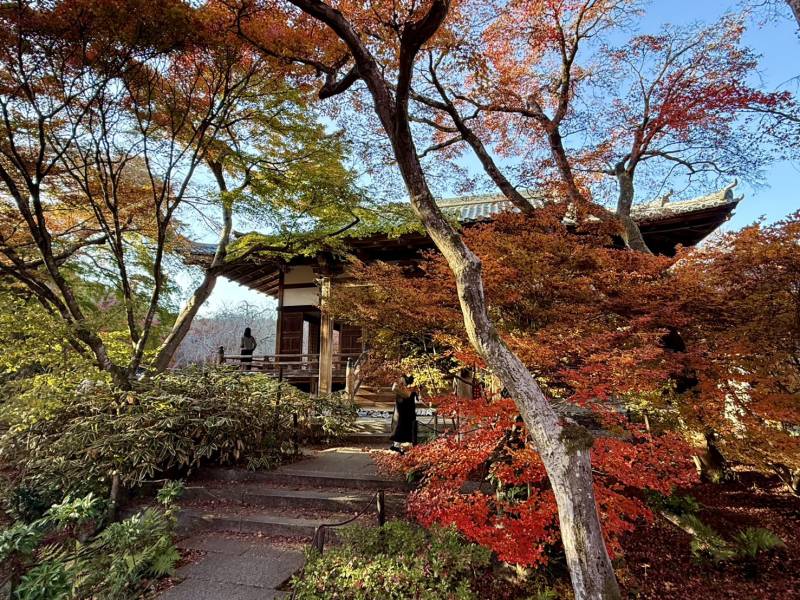
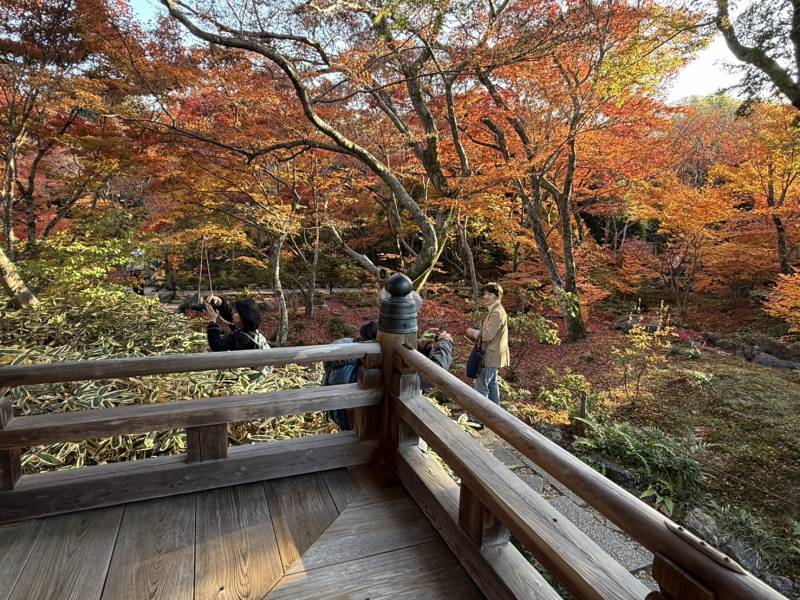
But less is known about Hokyo-in Temple. It is the ideal location for seeing Arashiyama's fall foliage.
The bright colors will amaze you with its small size. You can experience a genuinely Japanese ambience,
as though you've come across an amazing masterpiece.
From Risshisha, this is Huong.
I want to show you some of Arashiyama's must-see spots today.
Arashiyama is famous for its beautiful scenery, which includes wide rivers
surrounded by stunning mountains and green bamboo forests.
The bright colors of the nearby mountains are reflected on the water's surface,
especially during the autumn foliage season,giving the scene the appearance of a living picture.
But less is known about Hokyo-in Temple. It is the ideal location for seeing Arashiyama's fall foliage.
The bright colors will amaze you with its small size. You can experience a genuinely Japanese ambience,
as though you've come across an amazing masterpiece.
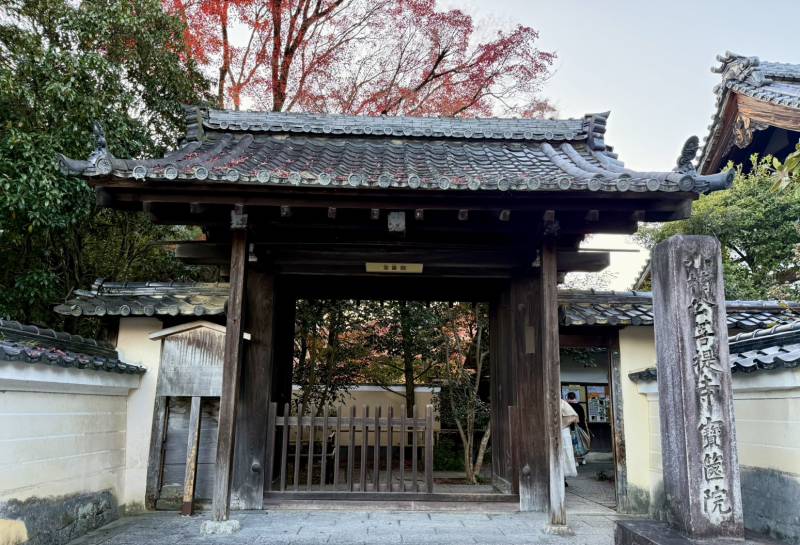
It was formerly known as Zennyu-ji Temple and was reportedly established during the Heian period
at Emperor Shirakawa's request, according to information I read on Yahoo.
However, Mokuan Shuyu, a student of Muso Soseki, restored it during the Nanboku-cho period,
and Ashikaga Yoshiakira, the second shogun of the Muromachi shogunate, briefly renamed it Kanrin-ji Temple.
Following Yoshiakira's passing, the temple was given its present name, Hokyo-in, in honor of his temple title.
Following that, it came under the respect of the Ashikaga clan's next generations,
but the temple also fell when the Muromachi shogunate fell.
at Emperor Shirakawa's request, according to information I read on Yahoo.
However, Mokuan Shuyu, a student of Muso Soseki, restored it during the Nanboku-cho period,
and Ashikaga Yoshiakira, the second shogun of the Muromachi shogunate, briefly renamed it Kanrin-ji Temple.
Following Yoshiakira's passing, the temple was given its present name, Hokyo-in, in honor of his temple title.
Following that, it came under the respect of the Ashikaga clan's next generations,
but the temple also fell when the Muromachi shogunate fell.
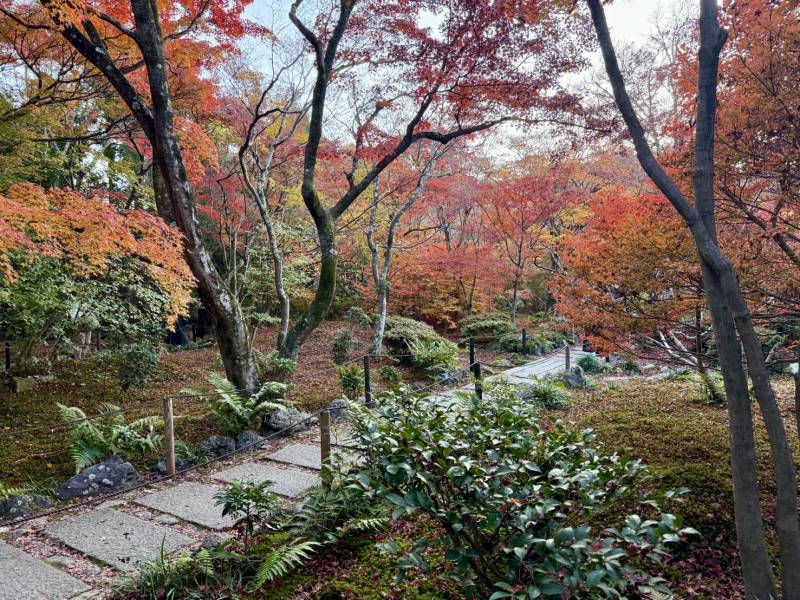
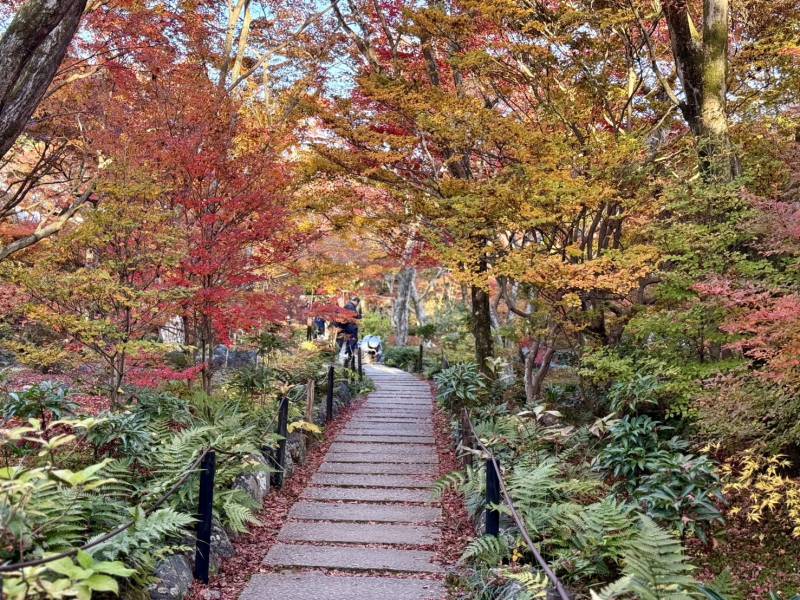
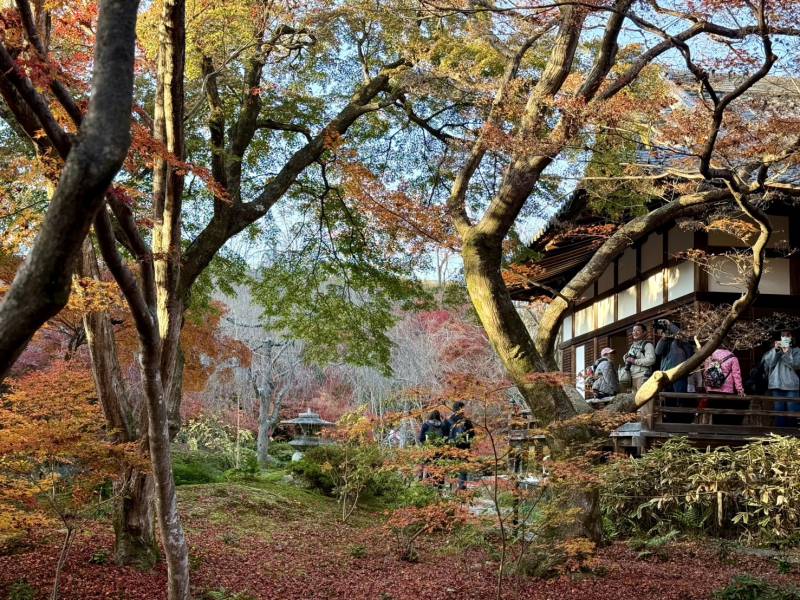
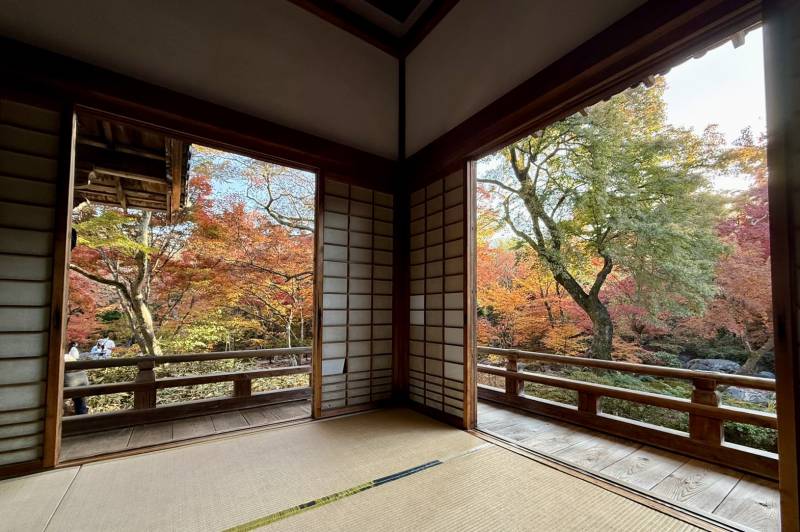
Enjoying tea in a spacious room with
big windows viewing the greenery would be wonderful.
big windows viewing the greenery would be wonderful.
Everyone, please come and visit!
Address: 9-1 Minami-Nakain-cho, Saga Shakado Monzen, Ukyo-ku, Kyoto City, Kyoto Prefecture
Hours: 9:00 AM - 4:00 PM
[November] 9:00 AM - 4:30 PM
Closed: New Year's Holidays
Admission Fee: 500 yen for adults, 200 yen for elementary and junior high school students
Goshuin (temple stamp): 300 yen
Address: 9-1 Minami-Nakain-cho, Saga Shakado Monzen, Ukyo-ku, Kyoto City, Kyoto Prefecture
Hours: 9:00 AM - 4:00 PM
[November] 9:00 AM - 4:30 PM
Closed: New Year's Holidays
Admission Fee: 500 yen for adults, 200 yen for elementary and junior high school students
Goshuin (temple stamp): 300 yen